Weed Bag Sizes: The Complete Guide From a Gram to a Pound
Ask ten people what a "zip" is and you will get the right answer from all ten. Ask them which bag size a zip actually needs and the answers fall apart fast.
That gap costs money. Order bags a size too small and product will not seal properly. Order a size too big and you are paying for film you do not need, and the bag looks half empty on the shelf. Neither is recoverable once the carton lands.
This guide lays out every common weed bag size, what each quantity weighs in grams and ounces, and the mylar bag dimensions that actually fit it. If you are packing for yourself, it will save you a reorder. If you are buying in volume, it will save you a great deal more.
Quick reference: the weed bag size chart
| Common name | Weight (grams) | Weight (ounces) | Typical mylar bag size |
|---|---|---|---|
| Dime bag | approx. 1 g | 0.035 oz | 3" x 4" |
| Gram | 1 g | 0.035 oz | 3" x 4" |
| Eighth, 8th, slice | 3.5 g | 1/8 oz | 3.5" x 4.5" or 4" x 6" |
| Quarter, quad | 7 g | 1/4 oz | 4" x 6" |
| Half ounce, half O | 14 g | 1/2 oz | 5" x 8" |
| Ounce, zip, O | 28 g | 1 oz | 6" x 9" or 6.5" x 10" |
| Quarter pound, QP | 113 g | 4 oz | 9" x 12" |
| Half pound, HP | 227 g | 8 oz | 11" x 14" |
| Pound, elbow, P | 454 g | 16 oz | 12" x 16" or 13" x 18" |
Two notes before you order against this chart.
First, the dimensions are the sizes the industry has settled on, not a standard anybody enforces. Gusset depth, film thickness and how tightly the product is packed all shift what fits. A loose, fluffy eighth needs more room than a dense one at the same weight.
Second, always size for the product at its bulkiest, not its average. A bag that only just closes is a bag that fails the seal.
What each quantity actually means
Dime bag
Historically a ten dollar amount rather than a fixed weight, which is why it has never had a clean gram figure. In practice it lands around a gram. The term survives more in conversation than on any label, and the packaging that serves it is simply a 1 gram bag.
Gram
The base unit everything else is built from. A single gram is the smallest quantity most operations bother to package, and it is the size where bag cost matters most as a share of the total, because you are buying a lot of small bags.
Eighth (3.5 g)
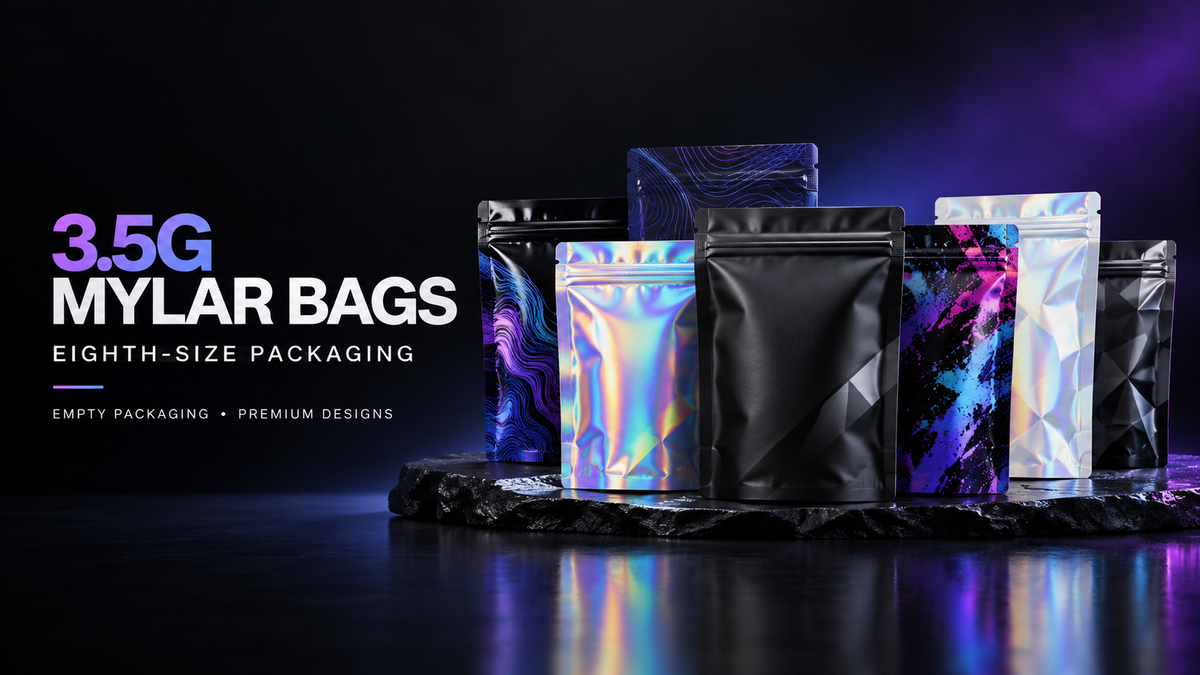
One eighth of an ounce, and the single most packaged quantity in the category. If you only stock one size, this is it. The 3.5 gram bag is also where most branding and print work happens, because it is the size the buyer actually holds.
Quarter (7 g)
A quarter ounce, two eighths. Often packed in the same bag as a 7 g to 14 g dual purpose size rather than getting a dedicated dimension.
Half ounce (14 g)
Half an O. The point where bag size starts to jump noticeably, and where film thickness starts to matter more, because there is more weight pulling on the seal.
Ounce, or zip (28 g)
A zip and an ounce are the same thing. The name comes from the resealable bag the quantity used to be sold in. 28 grams, properly 28.35 grams, though almost nobody prices the extra 0.35.
This is the boundary between personal and bulk. Below an ounce you are packaging a unit. At an ounce and above you are packaging inventory, and the demands on the bag change with it.
Quarter pound, or QP (113 g)
Four ounces. The first genuinely bulk size. At this weight the bag is carrying real load, and a thin film will stretch, sag and eventually split at the bottom seal.
Half pound (227 g)
Eight ounces. Less commonly stocked than a QP or a full pound, which means bag availability at this size is thinner across most suppliers.
Pound (454 g)
Sixteen ounces, the standard wholesale unit. A pound bag is a different product to a 3.5 gram bag in every way that matters: thicker film, wider gusset, stronger seal, and a much greater cost of failure if any of those fall short.
Matching bag size to the quantity
The rule most people get wrong is treating bag size as a volume question. It is a volume question and a weight question, and the second one is what breaks bags.
1 g to 7 g. Volume is the only real constraint. A flat bag is fine. Film thickness in the 3 to 3.5 mil range handles these sizes without complaint. Browse 3.5 g mylar bags (confirm final collection URL).
14 g to 28 g. Weight starts to matter. A flat bag still works, but a gusseted bag sits better on a shelf and is easier to fill. This is where a 4 mil film starts earning its price. See 1 oz mylar bags.
113 g and up. Weight is the primary constraint. You want a bottom gusset so the bag stands, a heavier film, and a wide seal area. At a pound, a bag that was specified for an ounce will fail, and it will usually fail in transit rather than on the bench where you would notice. See 1 pound bags.
Film thickness, in plain terms
Mil is a thousandth of an inch. It is the number that decides whether a bag survives handling.
- 3 to 3.5 mil. Suitable up to about 14 g. Light, cheap per unit, fine for product that moves quickly.
- 4 to 5 mil. The working standard for 28 g and for anything that will be shipped rather than handed over.
- 5 mil and above. Quarter pound and up, and anything going into a long storage window.
Thicker film also means a better barrier against light and oxygen, which is the actual mechanism behind keeping product from degrading. The bag is not just a container. Below a certain thickness it stops doing the job at all.
Resealable, smell proof and child resistant
Three features that get used interchangeably and should not be.
Resealable means a zipper or press seal that closes again after opening. Standard on most sizes up to an ounce, less common on pound bags where the seal is heat only.
Smell proof describes the barrier layer. A well constructed mylar bag with a proper heat seal contains odour well. A bag that has been opened and only zip closed contains it far less well. Any claim in this area depends on the seal being intact, so treat "smell proof" as a description of the material rather than a guarantee about the bag in use.
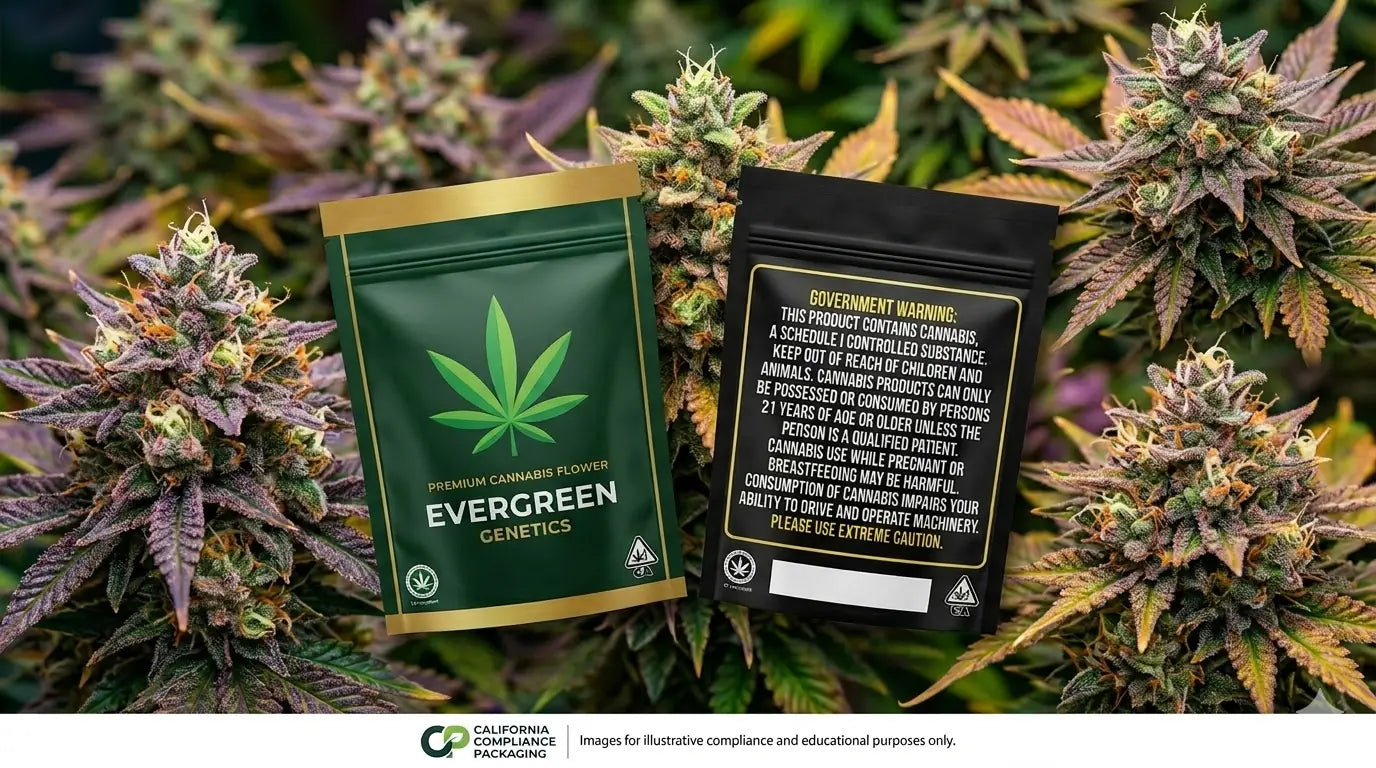
Child resistant is a regulatory specification, not a convenience feature. It is tested and certified, it varies by state, and a bag either meets the standard or it does not. If you are packaging for a licensed market, this is not optional and it is not something to infer from a product photo. Our sister site covers the requirements in detail at a2zmylarbags.com (link to the specific compliance page once live).
Buying bag sizes in volume
If you are ordering for a business rather than for yourself, a few things change the maths.
Do not spread across too many sizes. Most operations discover that three sizes cover 90 percent of what they pack. Concentrating volume into fewer SKUs gets you better unit pricing than spreading thinly across nine.
Size up before you size down. A bag slightly too large costs you a few cents of film. A bag slightly too small costs you the bag, the labour and sometimes the product.
Order against your actual pack profile, not the chart. If your eighths run consistently dense, you can drop a size. If they run fluffy, you cannot. Weigh and measure a real sample before committing to a large order.
Ask about case quantities early. Unit price on these products moves significantly with volume, and the break points are rarely where people expect them to be.
We stock every size in this guide as empty packaging, sold wholesale, with pricing that steps down as quantities go up. US shipping is free on all orders as standard policy. If you need a size that is not listed, or you are working out a mixed order across several sizes, get in touch and we will quote it.
Common mistakes worth avoiding
Buying by name instead of by dimension. "Eighth bags" from two suppliers can be meaningfully different sizes. Order against inches, not nicknames.
Ignoring the seal area. A bag needs clear, clean film at the top to heat seal properly. If your fill line runs into the seal zone, the bag will not close reliably no matter how good it is.
Assuming thicker is always better. Above what the weight requires, extra mil just adds cost and makes the bag stiffer to fill. Match the film to the load.
Forgetting the label footprint. If a compliance label, a strain label and a barcode all have to fit, that is a surface area requirement, and it sometimes forces a larger bag than the weight alone would.
Frequently asked questions
What size bag do I need for an eighth? A 3.5 gram eighth typically fits a 3.5" x 4.5" or 4" x 6" mylar bag. Fluffier product does better in the 4" x 6".
Is a zip the same as an ounce? Yes. A zip is an ounce, 28 grams. The name comes from the resealable bags the quantity was traditionally sold in.
How many grams are in a QP? A quarter pound is 113 grams, or 4 ounces.
How many eighths are in an ounce? Eight. That is where the name comes from, one eighth of an ounce each.
Are mylar bags smell proof? A properly constructed mylar bag with an intact heat seal contains odour very effectively, because the barrier layer is designed to block transfer in both directions. Performance drops once the bag has been opened and is relying on the zipper alone.
What thickness mylar bag should I use? Around 3 to 3.5 mil for a gram up to an eighth, 4 to 5 mil for ounces, and 5 mil or heavier for a quarter pound and above.
Do I need child resistant bags? If you are packaging for a licensed market, almost certainly yes, and the specific standard depends on your state. Check your local requirement before ordering, because a non compliant bag cannot be used and cannot usually be returned.
What is the smallest quantity worth packaging? One gram. Below that the bag cost starts to dominate the unit economics.